Open source RGB lighting control that doesn't depend on manufacturer software


One of the biggest complaints about RGB is the software ecosystem surrounding it. Every manufacturer has their own app, their own brand, their own style. If you want to mix and match devices, you end up with a ton of conflicting, functionally identical apps competing for your background resources. On top of that, these apps are proprietary and Windows-only. Some even require online accounts. What if there was a way to control all of your RGB devices from a single app, on both Windows and Linux, without any nonsense? That is what OpenRGB sets out to achieve. One app to rule them all.


Version 1.0rc2, additional downloads and versions on Releases page

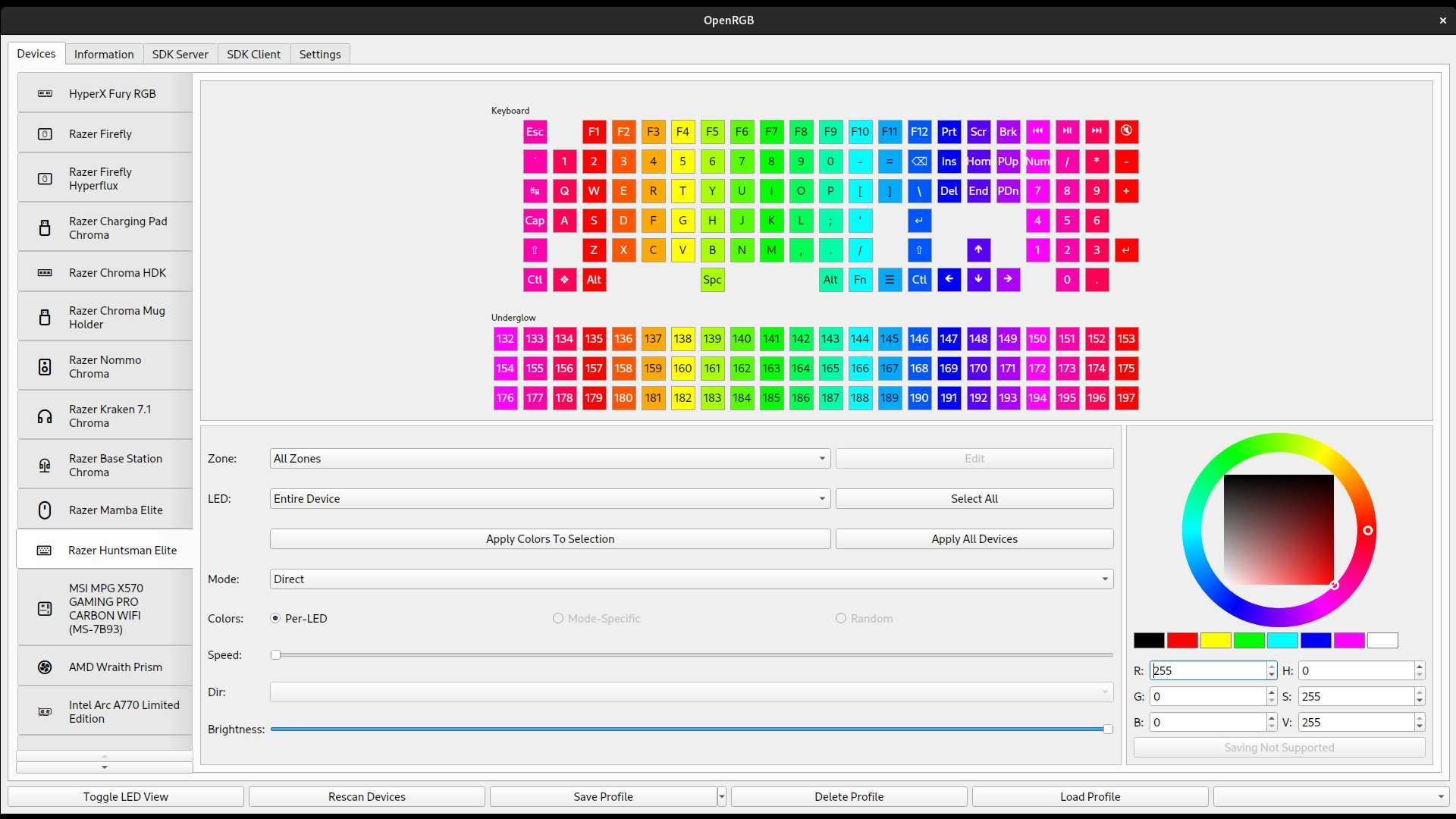
OpenRGB user interface

Control RGB without wasting system resources

Lightweight User Interface

OpenRGB keeps it simple with a lightweight user interface that doesn't waste background resources with excessive custom images and styles. It is light on both RAM and CPU usage, so your system can continue to shine without cutting into your gaming or productivity performance.
OpenRGB rules them all

Control RGB from a single app

Eliminate Bloatware

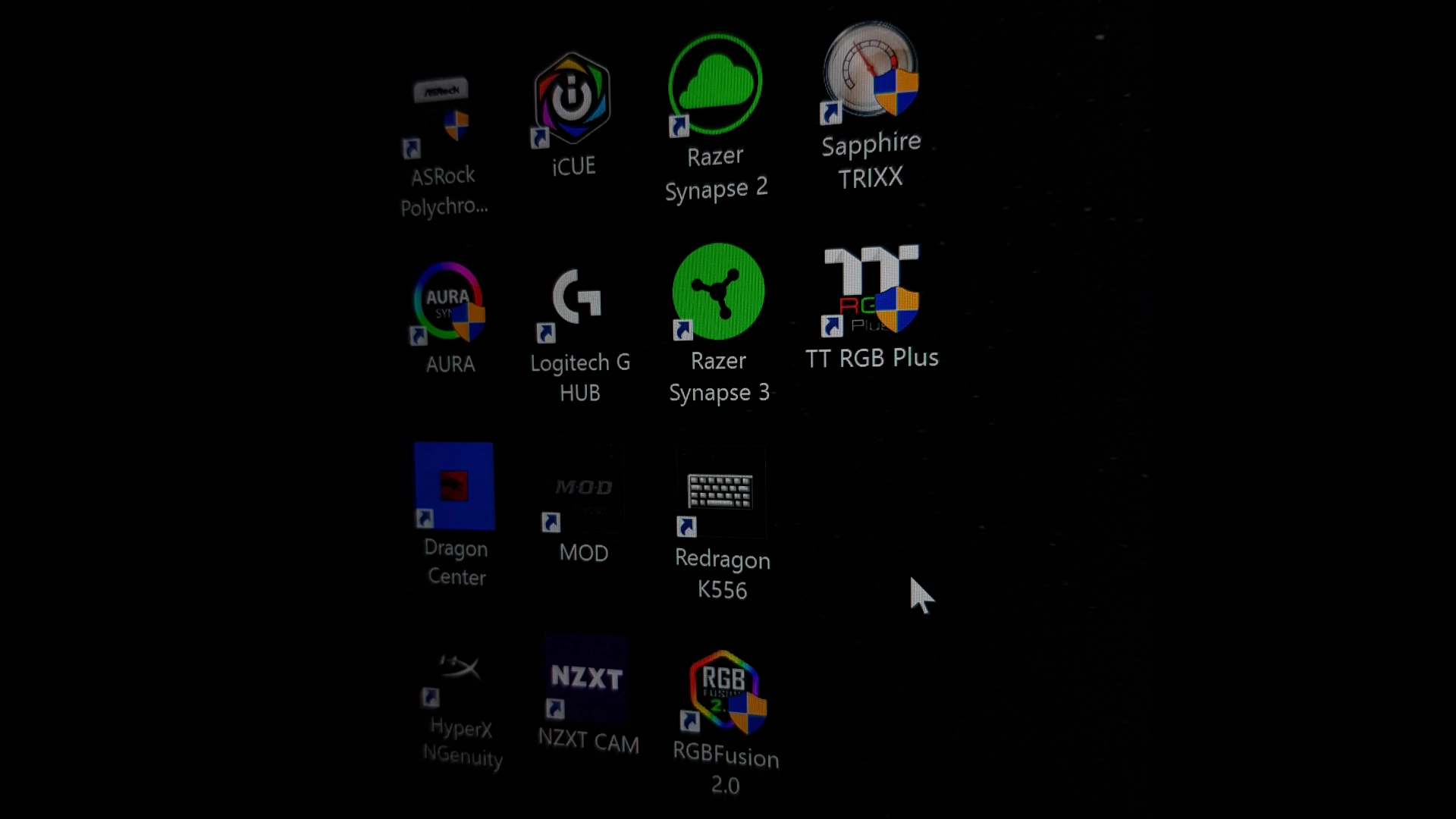
If you have RGB devices from many different manufacturers, you will likely have many different programs installed to control all of your devices. These programs do not sync with each other, and they all compete for your system resources. OpenRGB aims to replace every single piece of proprietary RGB software with one lightweight app.

OpenRGB is open source software

Contribute your RGB devices

Open Source

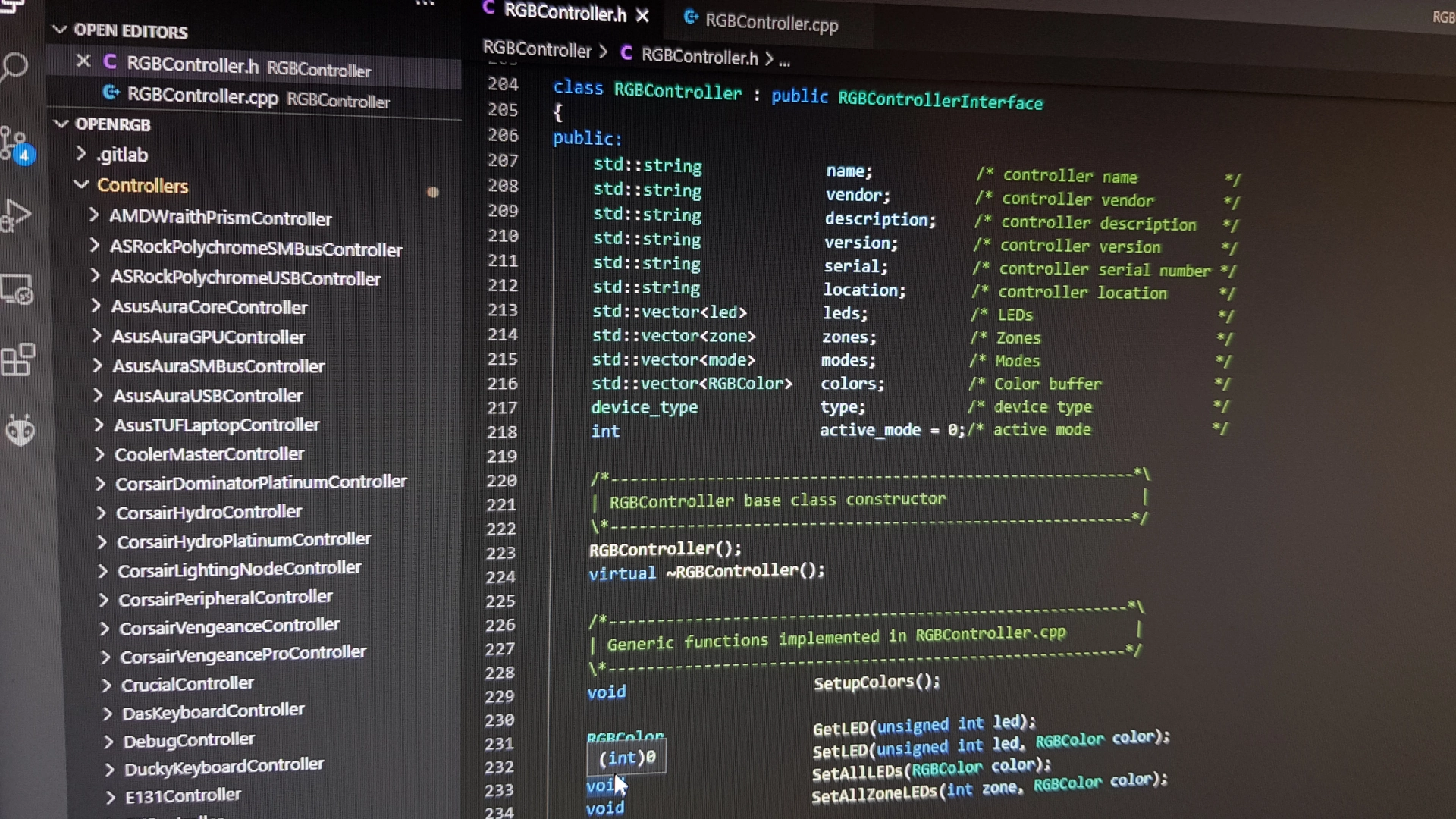
OpenRGB is free and open source software under the GNU General Public License version 2. This means anyone is free to view and modify the code. If you know C++, you can add your own device with our flexible RGB hardware abstraction layer. Being open source means more devices are constantly being added!


Check out the source code on GitLab
OpenRGB is Cross-Platform

Control RGB on Windows, Linux, and MacOS

Cross-Platform

OpenRGB runs on Windows, Linux and MacOS. No longer is RGB control a Windows-exclusive feature! OpenRGB has been tested on X86, X86_64, ARM32, and ARM64 processors including ARM mini-PCs such as the Raspberry Pi.

Robotrader License Key Top !!install!! Instant

In the neon-soaked corners of the digital underground, the name Robotrader

  1. Purchase a license: Visit the official Robotrader website and buy a license. They usually offer different plans, including a free trial, demo, or a paid subscription.
  2. Register an account: Create an account on the Robotrader website, providing the required information.
  3. Receive the license key: After purchasing a license, you will receive an email with the license key or a link to download it.

Whether you are a seasoned quant or a beginner dipping your toes into automated trading, this guide covers everything you need to know about obtaining, activating, and managing your license key safely. robotrader license key top

and custom bot development. Its primary purpose is to automate trading strategies across various platforms such as MetaTrader (MT4/MT5), Amibroker, and TradingView, connecting them directly to broker APIs for real-time execution. 2. The Function of the License Key In the neon-soaked corners of the digital underground,

What is a Robotrader License Key?

Access to a legitimate license key is granted through various subscription tiers, which vary based on the required tools and server hosting: Monthly Plan : Approximately per month for the licensed software. Annual Plan : Approximately for a full year of access. Cloud Hosting Purchase a license : Visit the official Robotrader

Security: Unauthorized keys are the most common entry point for malware designed to steal exchange API keys and drain wallets.

Connect your MetaTrader 4 (MT4) or MetaTrader 5 (MT5) account details provided by your broker. Key Features and Capabilities Automated Signals